Fox Racing founded
The brand begins as rider equipment. Pack programs later inherit the same habit of naming parts instead of selling a mood.
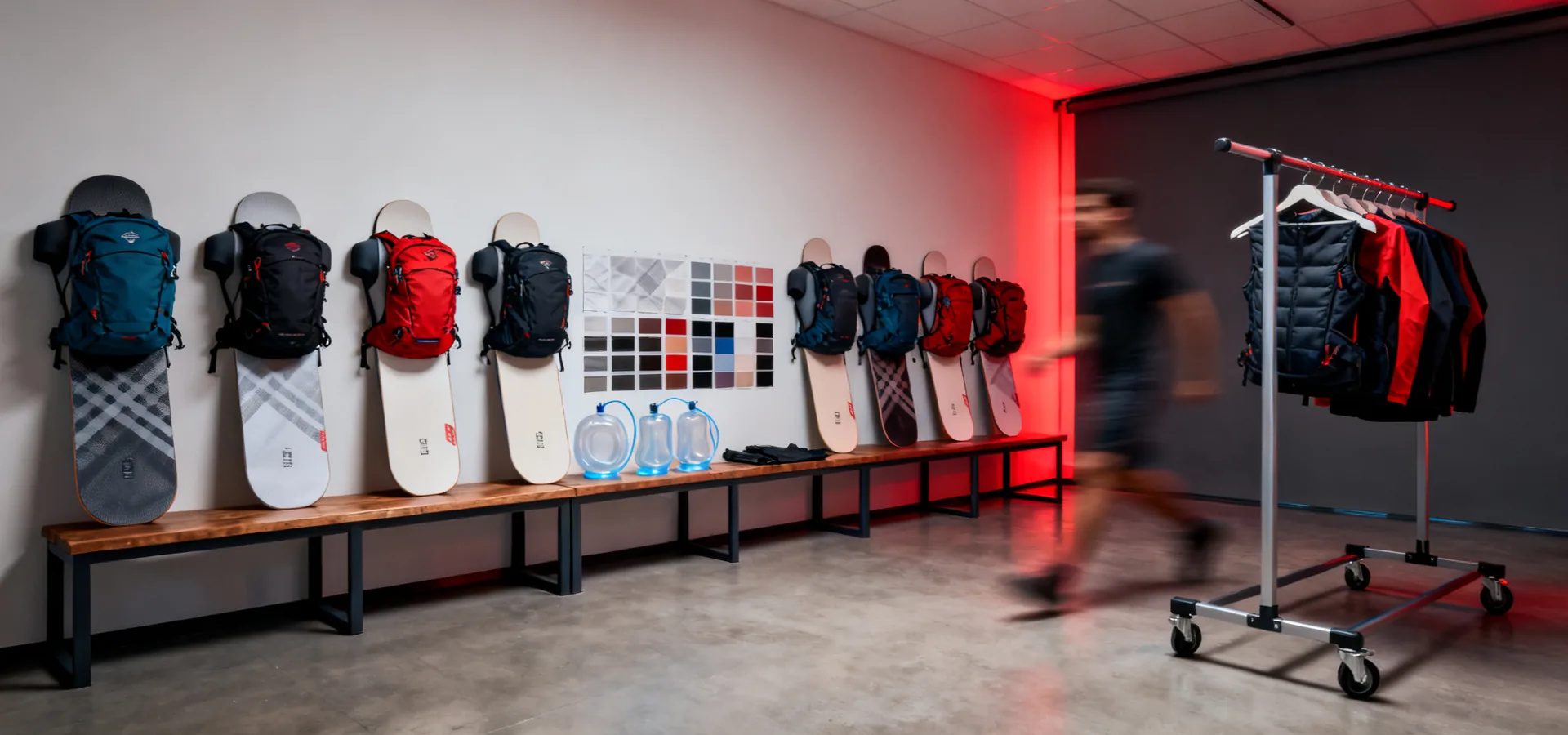
Fox Racing treats a rider backpack as a small plumbing problem attached to a textile chassis. The reservoir must fill, seal, flex and dry. The harness must keep that mass on the torso without turning lumbar foam into a heat sink. The shell must survive abrasion at a named denier. That is the company story the desk still tells buyers.
This is a construction roadmap, not a carbon slogan board. Each node is a BOM decision the sample bench can evidence. Dates are program milestones, not market-share claims.
A 2 L lumbar hydration pack and a 12–24 L trail chassis no longer share a style code. Bounce and hot-spot returns in specialty retail in 2019–2021 are why the desk stopped shipping both silhouettes under one hydration family name.
DWR plus PU coating versus laminated membrane is written with hydrostatic head when a dry pocket or rain cover is in the BOM. DWR-only shells keep the phrase “water resistant” and refuse “100% waterproof.”
Ladder locks, sternum magnets and bite valves listed as replaceable SKUs so a failed slider does not retire a sound TPU bladder. Repairability is a parts list, not a circular-economy headline.
1.5 L youth packs keep CPSIA files and character-free art. Adult duty vocabulary stays off those hangtags even if a club desk asks for a single “Fox Racing youth gear” carton.
The brand begins as rider equipment. Pack programs later inherit the same habit of naming parts instead of selling a mood.
Reservoir routing becomes a quoted job: keep water on the back, keep the bite valve at the collar, keep the hose from whipping the shoulder.
Low-profile 1.5–2 L lumbar hydration packs get their own torso-length grade so they stop inheriting hiking foam.
A 2–3 L chassis adds a pump sleeve and tool roll without dropping leak-flex on the TPU bladder.
Recycled nylon lots are sampled against virgin denier tear strength. They ship only when the mill lot matches the hangtag number.
We do not claim a factory-wide bluesign or OEKO-TEX blanket. Textile scope is named per mill and per component. ISO 9001:2015 describes the quality system. amfori BSCI describes social audit scope. Those documents attach to programs. Pattern rooms still grade running lumbar packs separately from pit duffels because a vest copied onto hiking foam will hot-spot at tempo — that trade-off is why the two BOMs stay separate after 1998-era hands-free routing met modern torso-length grading.
Without a signed testimonial file, Fox Racing lists the desks that actually touch a pack program. These are role labels, not invented company quotes.
Bring litre class, denier, rain-film type and channel. The desk will say which roadmap node the brief actually sits on.